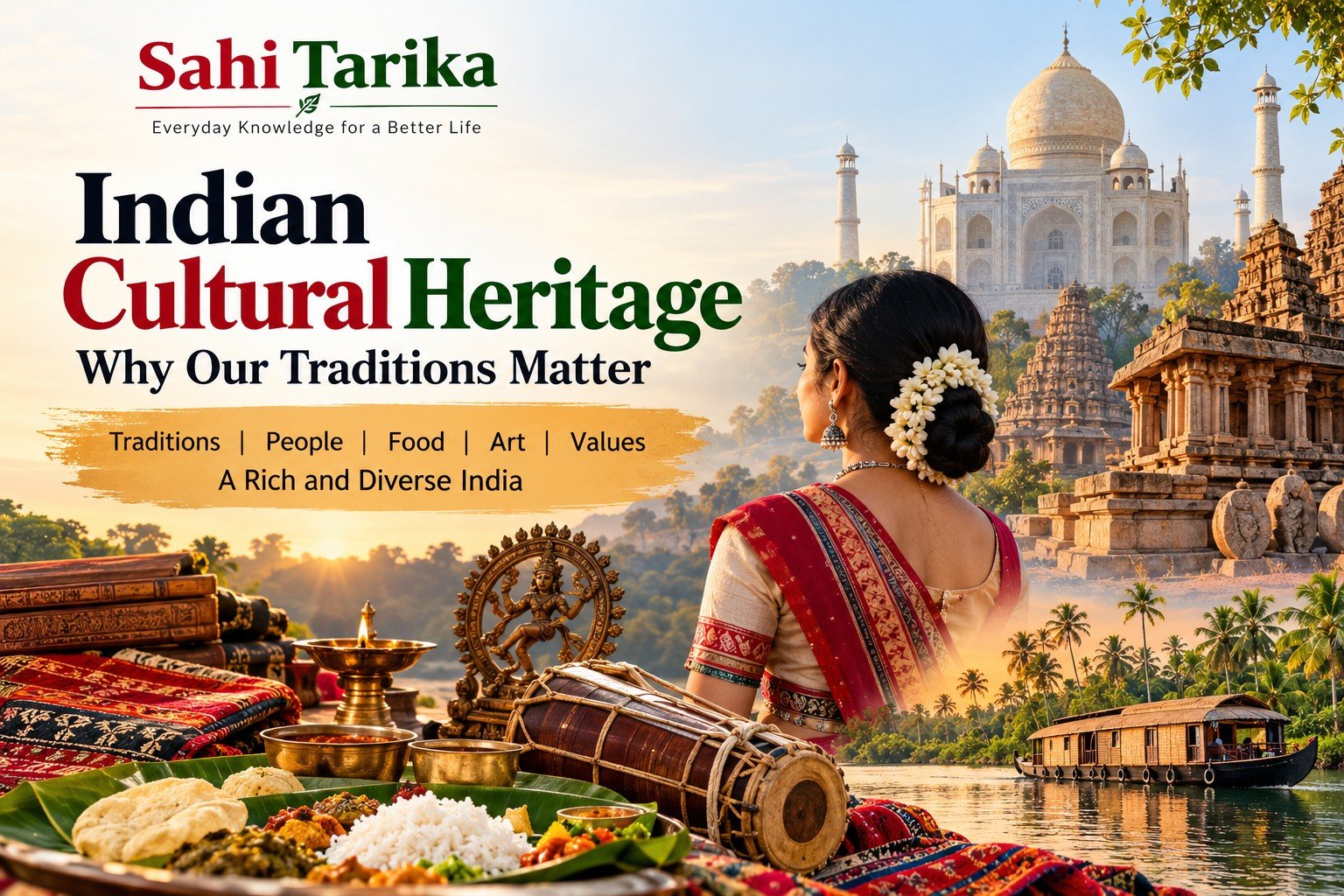
Culture is often described through festivals, traditional clothes, music, food and customs. But culture is much more than what we can see during a celebration. It is also the language spoken at home, the stories told by grandparents, the way food is prepared, the values taught to children and the memories connected to a particular place.
Indian cultural heritage is especially diverse because India is home to hundreds of communities, languages, traditions, art forms and regional practices. What feels ordinary in one part of the country may be completely unfamiliar in another. Yet these differences are also part of what makes Indian society so culturally rich.
🔔 Don't miss our latest updates!
Tap the bell icon at the top of this channel to turn on notifications.
From the traditional practices of the Northeast to the folk traditions of Rajasthan, from the classical arts of South India to the crafts of Kashmir, Indian culture has developed through centuries of interaction between communities and generations.
In a rapidly changing world, preserving this heritage does not mean refusing modern life. It means understanding where our values, stories and traditions come from while allowing them to evolve naturally.
What Does Cultural Heritage Really Mean?
Cultural heritage includes the traditions, knowledge, skills, objects, places and practices that communities consider meaningful and pass from one generation to another.
Some parts of heritage are physical. Historical buildings, monuments, traditional clothing, handicrafts, manuscripts and archaeological sites are examples of tangible heritage.
Other parts cannot simply be placed inside a museum. Languages, oral traditions, traditional knowledge, performing arts, food practices, rituals and community customs are examples of living or intangible heritage.
UNESCO describes cultural diversity as the many ways in which cultures and societies express themselves and pass those expressions between generations. This makes culture something living rather than something frozen in the past. UNESCO’s explanation of cultural diversity provides useful background on this idea.
| Type of Heritage | Examples | How It Is Passed On |
|---|---|---|
| Tangible heritage | Monuments, buildings, artefacts, traditional objects | Preservation, museums, documentation |
| Intangible heritage | Language, songs, stories, customs and traditional knowledge | Families, communities and education |
| Food heritage | Traditional recipes, cooking methods and local ingredients | Home cooking and community practices |
| Artistic heritage | Dance, music, crafts, painting and theatre | Practice, teaching and performances |
| Oral heritage | Folklore, legends, proverbs and family stories | Storytelling and conversations |
Why Indian Cultural Heritage Still Matters
It is easy to assume that traditions belong mainly to older generations. In reality, cultural heritage can have an important place in modern life as well.
Culture gives people a sense of identity. It helps individuals understand their connection with family, community and place. It can also create a sense of belonging at a time when people increasingly move between cities, states and countries for education and employment.
For example, someone who grows up away from their ancestral village may still feel connected to it through a family recipe, a traditional song, a language spoken by their grandparents or an annual festival celebrated by relatives.
These small connections can become surprisingly important over time.
1. Culture Creates a Sense of Identity
Identity is not based on a single characteristic. It can include language, family history, geography, food, traditions, education and personal experiences.
Cultural traditions provide one of the ways people understand this identity. A Manipuri family, for example, may have cultural practices that differ considerably from those of a family in Kerala, Punjab or Gujarat. Neither is more Indian than the other. Their differences contribute to India’s cultural diversity.
This is why cultural preservation should not mean creating a single definition of Indian culture. India’s cultural strength comes partly from its variety.
2. Traditional Knowledge Has Practical Value
Many traditional practices developed because communities had to solve practical problems with the resources available to them.
Traditional farming methods, food preservation techniques, local architecture, weaving, handicrafts and knowledge of seasonal ingredients are examples.
Not every traditional practice is automatically better than a modern alternative. However, traditional knowledge can contain useful ideas that deserve to be studied rather than forgotten.
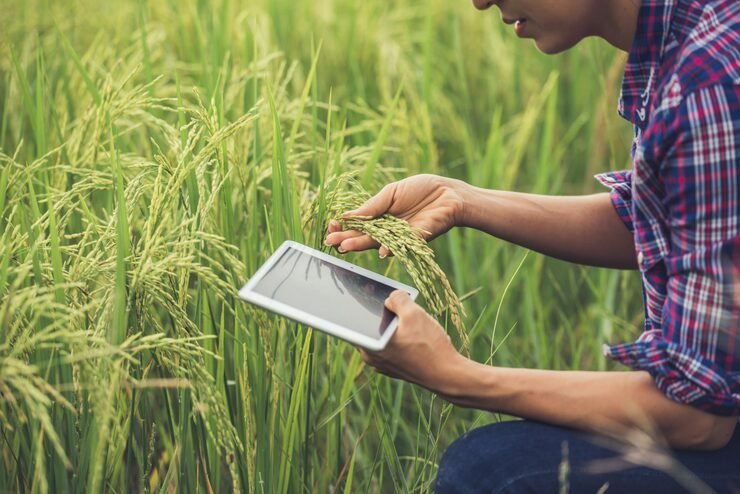
The same principle applies to local agricultural knowledge. Understanding soil, water and seasonal conditions has always been important to farming communities. Today, sustainable land and water management remains an important part of food security and environmental protection. The Food and Agriculture Organization’s work on land, soil and water highlights the importance of managing these resources sustainably.
3. Food Is One of the Strongest Forms of Cultural Memory
Food is perhaps one of the easiest ways to experience culture.
A recipe may contain more history than we realise. Ingredients reflect geography. Cooking techniques reflect available resources. Certain dishes may be connected to festivals, seasons, family gatherings or religious and community traditions.
Indian cuisine demonstrates this diversity particularly well. The food of Northeast India, for instance, can be very different from the food traditionally associated with North or South India.
Even within one state, recipes can change from one community or district to another.
When a traditional recipe disappears, the loss is not simply culinary. A small piece of family and community history can disappear with it.
4. Languages Carry Stories That Cannot Always Be Translated
Language is more than a communication system. It carries expressions, humour, memories, proverbs and ways of describing the world.
Many traditional sayings have meanings that are difficult to reproduce perfectly in another language. A proverb passed from grandparents to grandchildren can therefore carry cultural knowledge that may not exist in exactly the same form elsewhere.
For younger generations, learning even a few words or phrases from a family language can help maintain a connection with their cultural background.
This does not mean people should avoid learning widely spoken languages. Multilingualism can be a strength. A person can learn English, Hindi or another widely used language while continuing to value their mother tongue.
5. Traditional Arts Give Communities a Voice
Music, dance, theatre, weaving, painting, sculpture and handicrafts are not merely forms of entertainment. They can record history and express community identity.
Traditional artists often learn their skills through years of practice and observation. When such skills are not passed on, an entire form of knowledge can become difficult to recover.
Technology can actually help here. Digital archives, videos, photographs and educational content can make traditional art more accessible to younger audiences.
However, documentation should not replace the artists themselves. Living traditions remain strongest when people continue practising, teaching and adapting them.
Tradition and Modern Life Can Exist Together
One of the common misunderstandings about cultural preservation is that people must choose between tradition and modernity.
They do not.
A young person can use a smartphone, study artificial intelligence, work in a modern company and still learn a traditional dance or cook a family recipe.
A traditional festival can use digital invitations. A local artisan can sell handmade products online. A folk musician can publish performances on a video platform. A traditional recipe can be documented digitally for future generations.
| Traditional Approach | Modern Opportunity | Possible Benefit |
|---|---|---|
| Family storytelling | Digital audio or video recording | Preserves memories for future generations |
| Traditional recipes | Digital recipe archives | Protects local food knowledge |
| Handicrafts | Online marketplaces | Expands access to customers |
| Folk music | Digital publishing | Reaches younger audiences |
| Local languages | Digital learning resources | Encourages language learning |
How Young People Can Help Preserve Culture
Cultural preservation does not have to begin with a large organisation or expensive project. It can begin at home.
Learn from older family members
Ask grandparents or older relatives about family traditions, local history, recipes, songs and stories. Write them down or record them with their permission.
Learn a traditional skill
Try learning a local craft, musical instrument, dance form, cooking method or traditional art. Even learning the basics can help keep a practice alive.
Use technology positively
Young people can document cultural practices through photographs, videos, blogs, podcasts and educational projects.
Support local creators
Buying directly from artisans, attending local performances and sharing the work of traditional artists can help create an economic reason for cultural skills to continue.
Respect differences
Cultural preservation should not become an excuse for judging other communities. India’s cultural richness comes from the coexistence of different traditions.
Culture in the Digital Age
The internet has changed the way culture is discovered and shared.
A traditional song that was once known only within a village can now potentially reach audiences around the world. A craftsperson can display their work online. A student can research a regional festival without travelling immediately to the place where it originated.
But digital culture also creates challenges.
Short videos and social media posts can sometimes remove traditions from their original context. A complex custom may be reduced to a few seconds of entertainment. Incorrect information can also spread quickly.
That is why digital documentation should include context whenever possible: where a tradition comes from, who practises it, what it means and how it has changed over time.
Preserving Culture Does Not Mean Preserving Everything Unchanged
This is an important distinction.
Every culture changes. New generations interpret traditions differently. Some practices disappear naturally while others adapt to new circumstances.
Preservation should therefore focus on knowledge, meaning and continuity rather than forcing every tradition to remain exactly as it was hundreds of years ago.
A healthy cultural tradition can evolve while retaining its core identity.
The goal is not to create a museum where everything remains untouched. The goal is to make sure valuable knowledge and cultural expressions are not lost simply because nobody took the time to pass them forward.
Culture, Community and the Future
Cultural heritage can also strengthen communities. Festivals, local events, traditional arts and shared food can bring people together.
They create opportunities for different generations to interact. Children can learn from older people, while older generations can discover how younger people interpret traditions.
This two-way exchange is particularly important today because migration and digital communication are changing how communities stay connected.
A person may live hundreds or thousands of kilometres away from their ancestral home but still participate in cultural life through family gatherings, digital communities and annual visits.
In this sense, culture can act as a bridge between the past and the future.
Simple Ways to Keep Your Cultural Heritage Alive
| Action | Difficulty | Long-Term Value |
|---|---|---|
| Learn a family recipe | Easy | Preserves food traditions |
| Talk to older relatives about local history | Easy | Preserves oral history |
| Learn your mother tongue | Moderate | Protects language and identity |
| Attend local cultural events | Easy | Supports community traditions |
| Buy from local artisans | Easy | Supports traditional livelihoods |
| Document family photographs and stories | Moderate | Creates a family archive |
| Teach children a traditional skill | Moderate | Transfers knowledge between generations |
Frequently Asked Questions
What is Indian cultural heritage?
Indian cultural heritage includes the traditions, languages, food practices, arts, crafts, stories, customs, historical places and knowledge passed between generations across different Indian communities.
Why is cultural heritage important?
Cultural heritage helps people understand their identity, history and connection with their communities. It also preserves knowledge and creative traditions for future generations.
Is culture only about festivals and traditions?
No. Culture also includes language, food, family practices, art, music, storytelling, social customs, traditional knowledge and everyday ways of life.
How can young people preserve Indian culture?
Young people can learn local languages, document family stories, practise traditional arts, learn traditional recipes, support artisans and use digital platforms to share cultural knowledge responsibly.
Can culture change over time?
Yes. Culture naturally changes as societies change. Preserving culture does not necessarily mean keeping every practice exactly the same. Traditions can adapt while retaining their meaning and identity.
How does technology help cultural preservation?
Technology can help record oral histories, digitise photographs, publish traditional music and art, document recipes and make cultural resources accessible to wider audiences.
Why are local languages important?
Local languages carry stories, expressions, traditions and community knowledge. Supporting them helps preserve cultural identity and intergenerational communication.
What is the difference between tangible and intangible cultural heritage?
Tangible heritage includes physical objects and places such as monuments, buildings and artefacts. Intangible heritage includes knowledge, language, music, traditions, skills and oral practices.
Does preserving culture mean rejecting modern lifestyles?
No. Modern technology and traditional culture can coexist. People can participate fully in modern life while continuing to learn and practise meaningful cultural traditions.
How can families preserve their own cultural heritage?
Families can record stories, preserve photographs, teach traditional recipes, speak their home language, celebrate meaningful traditions and encourage children to learn about their family history.
Conclusion
Indian cultural heritage is not simply a collection of old customs. It is a living connection between people, places, memories, knowledge and generations.
Some traditions may change. Some may disappear. Others may find new life through technology and younger generations. What matters is that valuable knowledge is not forgotten without anyone making an effort to preserve it.
We do not have to choose between tradition and progress. We can use modern education, technology and communication to protect the cultural knowledge that gives communities their identity.
The simplest place to begin is often at home: ask an older family member a question, learn a traditional recipe, understand the meaning behind a festival, speak a local language or listen to a story that has been passed down for generations.
Small actions may seem insignificant, but culture has always survived through small acts of remembering and sharing.
Related Articles
- How to Organize Your Digital Life: Advanced File and Data Management Guide
- How to Manage Your Time Effectively: Complete Time Management Guide
- Paise Bachana Kaise Start Kare: Beginner Se Smart Saver Banane Ka Guide
Explore more from Sahitarika:
External Source
For further reading on cultural diversity and heritage, readers can refer to the UNESCO World Heritage Centre’s explanation of cultural diversity.